
Let themEat Cake
BUT KNOW THEIR FLAVOR
What a career spent in travel, luxury hospitality & couture events taught Kristie about how to run an agency & build a platform for women in business to power their presence without losing their heads. It’s beautiful chaos. It’s unexpected. It’s lived in. It’s weird science. It’s like opening a bottle of champagne. Who knows where the cork will land. She tosses cake in the face of convention, burns the box, and uses its ashes as eyeliner. Branding is found in the quiet Velvet Rebellion. Kristie & Company stage that on the daily.


MakingHerstory
SHE DIDN’T SET OUT TO CREATE A PLATFORM.
Kristie Christensen’s approach to branding didn’t end with a textbook.
It started there — with a degree in marketing and the traditional foundation of strategy, messaging, and consumer behavior. But the real education came later, in the environments where influence actually takes shape.
Over more than two decades working across luxury branding, retail, hospitality, media and events, Kristie developed a fascination with a question most marketing conversations never fully answer: Why do some names command attention while others quietly disappear? The answer, she discovered, had less to do with tactics and more to do with influence. And influence, it turns out, is rarely created by a single strategy. It’s created by an ecosystem.


what lUXURY actually tAUGHT KRISTIE
LUXURY LOVES COMPANY.

Luxury loves Company
LUXURY SHAPED EVERYTHING
Luxury brands understand something most businesses forget: perception is designed.
Years spent inside luxury retail and boutique ownership gave Kristie a front-row seat to how identity, storytelling, and atmosphere shape desire long before a purchase is made, as well as how partnership can frame a brand. The great fashion houses of the world don’t simply sell products — they craft mythology around their names. Watching how luxury brands operate revealed a powerful truth: the strongest brands aren’t chasing attention. They’re orchestrating it.
At a luxury boutique hotel brand with a nearly nonexistent marketing budget, she learned first hand how proximity could outperform spend. By partnering with heritage houses — LVMH-level brands whose names carried signal — Kristie and her creative team engineered collaborations that drove room nights and brand equity simultaneously. No shouting. No discounting No chasing.
Just alignment.
Luxury taught her that perception is negotiated long before purchase. That adjacency matters. That partnerships compound credibility. That atmosphere converts. It taught her that brand building isn’t about volume. It’s about leverage. That lesson didn’t shape one part of what she does.
It shaped all of it.
Marketing must be positioned with precision. Media must distribute signal, not noise. Mindshare must be cultivated intentionally. Moments must be engineered to feel inevitable.
Luxury wasn’t a chapter.
It was the calibration system.
PRESS FOR Champagne
hOW HOSPITALITY FRAMED THINGS
Press for Champagne
THE POWER OF EXPERIENCE
Hospitality shaped Kristie Christensen’s understanding of one of branding’s most overlooked truths: influence lives in the experience.
In the hospitality world, nothing is accidental. The lighting, the music, the greeting at the door, the atmosphere of a room — every detail is intentionally designed to create a feeling. The most memorable hotels, restaurants, and venues understand that guests rarely remember every detail of what they purchased, but they always remember how they felt while they were there.
That philosophy deeply informed Kristie’s approach to branding. Because a brand isn’t simply what a business says about itself. It’s the environment it creates, the story people step into when they engage with it, and the moments that turn customers into loyal advocates.
Hospitality revealed something powerful: the brands that endure don’t just deliver services. They create experiences people want to live and breathe in…and then come back for more.

how history shaped the philosophy
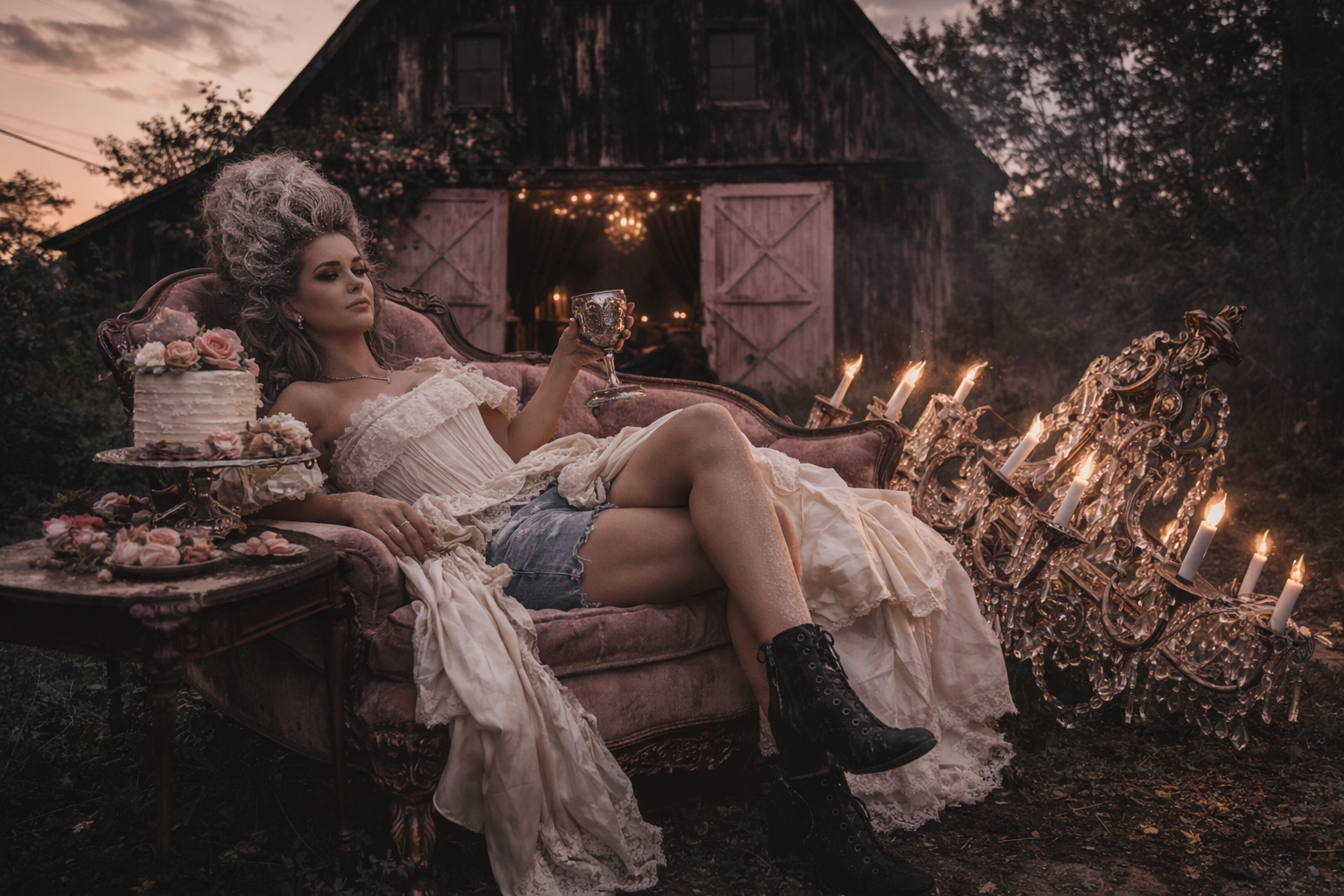
Let themEat Cake
Kristie Christensen’s philosophy was also shaped by a lifelong fascination with history and the forces that shape cultural influence.
Long before marketing became an industry, influence was already being engineered through spectacle, symbolism, and reputation. Royal courts, cultural icons, and fashion houses understood the theatre of perception centuries before modern branding language existed.
History is full of powerful figures who understood the power of narrative — even the infamous powder-wigged queen who supposedly suggested people eat cake before infamously losing her head. The lesson isn’t about cake. It’s about perception, spectacle, and the power of narrative.
Fortunately, in modern branding we study these moments without losing our heads — though we do occasionally toss a little cake at convention.
Once you start noticing it, you can’t unsee it.
Because history didn’t just inspire the philosophy.
It pre-engineered it.
HOW THE pLATFORM was born
These worlds shaped the philosophy behind the House of Champagne and Kristie’s platform – THE CHAMPAGNE METHOD. Where most branding approaches treat marketing, media, events, and visibility as separate tactics, Kristie Christensen approaches them as parts of a single ecosystem — a platform built around four forces of influence:
Marketing — the narrative that defines the brand
Media — the channels that amplify it
Mindshare — the perception people hold
Moments — the experiences that make it real
Together they form the foundation of what Kristie calls Branding Couture — the belief that powerful brands aren’t assembled piece by piece. They’re orchestrated. Thoughtfully. Intentionally. And sometimes with a smoky side eye to convention.
Because once you understand how influence has always worked, you stop chasing trends and start building brands that command the room. You know their flavor – and then serve them the cake.
Not Branding as Usual.
Branding Couture.
the Marketing
THE PSYCHOLOGY OF PERCEPTION
Marketing, at its core, is the science of influence.
Long before algorithms and advertising dashboards existed, perception was already being shaped through narrative, symbolism, and cultural signals. Royal courts understood it. Luxury houses perfected it. Even infamous queens knew the power of a story — whether they actually said “let them eat cake” or not.
Because branding has never been about information.
It has always been about emotion.
The brands that endure don’t simply communicate what they do. They shape how people feel, what they believe, and where they see themselves in the story.
At the House of Champagne, marketing begins there — with identity, narrative, and psychological positioning.
Because when perception is clear, influence follows.
the Media
STORY MUST TRAVEL
If marketing shapes the narrative, media is what carries it into the world.
Long before social platforms existed, influence traveled through culture itself — through society columns, magazine pages, celebrity sightings, and the quiet power of word-of-mouth.
In earlier centuries it might have been a powder-wigged whisper in a ballroom. A rumor traded over champagne. A name repeated in the right rooms until it became legend.
Today the channels look different, but the principle hasn’t changed. Story must travel. Sometimes that story appears in editorial pages. Sometimes it spreads through social media, shared content, and digital communities. Sometimes it moves through partnerships, events, and the rooms where tastemakers gather.
The medium evolves. Narrative does not.
Working alongside heritage editorial brands and modern media ecosystems revealed something simple but powerful: the brands that endure don’t just create content. They create signal. Because media isn’t just exposure. It’s how influence travels.
And when story and visibility align, a brand stops chasing attention and starts attracting it.


the Mindshare
INFLUENCE LIVES IN PROXIMITY
If media is how story travels, mindshare is where that story takes root.
Influence has never existed in isolation. It grows in proximity — in the rooms where ideas are exchanged, alliances are formed, and credibility compounds over time.
History shows us this clearly. Royal courts, intellectual salons, editorial circles, and cultural institutions all operated on the same principle: when influential minds gather with purpose, reputation expands beyond the individual.
The same dynamic exists today. Boards. Strategic collaborations. Creative circles. Communities of ambitious thinkers who elevate one another through conversation, perspective, and shared momentum.
Because authority isn’t declared.
It’s reinforced through association.
At the House of Champagne and, more specifically, in THE CEO SOCIETY, mindshare is the intentional cultivation of those ecosystems — environments where brands are not simply visible, but respected, referenced, and remembered.
Because brands grow in collaboration and culture.
And collaboration and culture grow in rooms.
the Moments
WHERE INFLUENCE BECOMES MEMORY
There is a moment in every great experience when the room shifts.
The lights soften. Conversations pause. Attention gathers. Something is about to happen — and everyone can feel it.
Years spent designing events and immersive brand experiences revealed something marketing alone never could: influence becomes real when people experience it together.
Luxury brands understand this instinctively. Hospitality has perfected it. The best environments know how to pace anticipation, reveal meaning, and create the kind of atmosphere people remember long after the evening ends.
Because memory is where brands live. A perfectly timed reveal. A room leaning in. The quiet thrill of a champagne cork about to release.
These moments aren’t accidental. They’re designed.
At the House of Champagne, moments are where narrative becomes experience — where brands stop speaking and start being felt.
Because the most powerful brands don’t just enter a room. They change it.
